Questions about your child’s speech? You’re in the right place.
Every child learns to talk at their own pace. If something about your child’s speech or language worries you, we’re here to listen, explain and help, in English or Spanish.
Children learn to talk at different rates, and every child is different. If something about your child’s speech or language worries you, a screening is a simple way to find out.
You know your child best. Some signs that it may be worth a conversation with a speech-language pathologist:
Few words or slow progress
Your toddler uses fewer words than other children the same age, or isn’t yet putting words together.
Hard to understand
People who know your child well still have trouble understanding what they say.
Frustration or trouble following
Your child gets frustrated when not understood, or has trouble following simple directions.
01
What happens at a screening
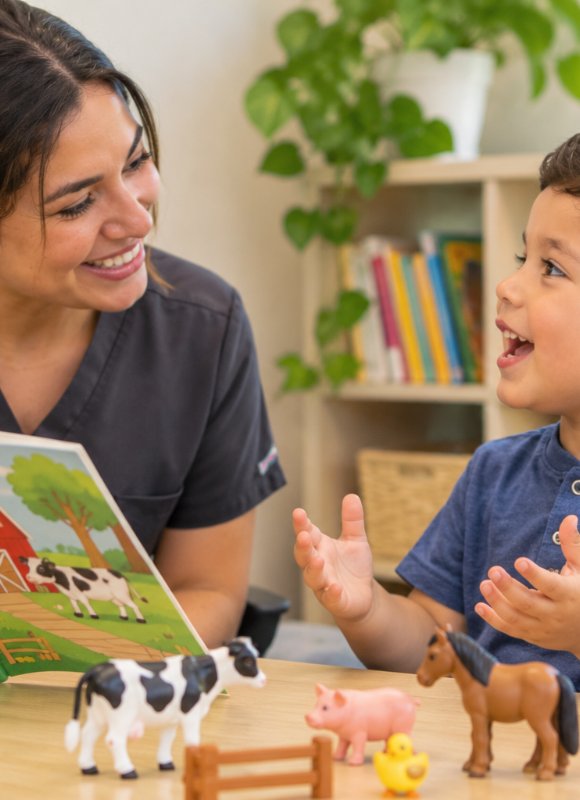
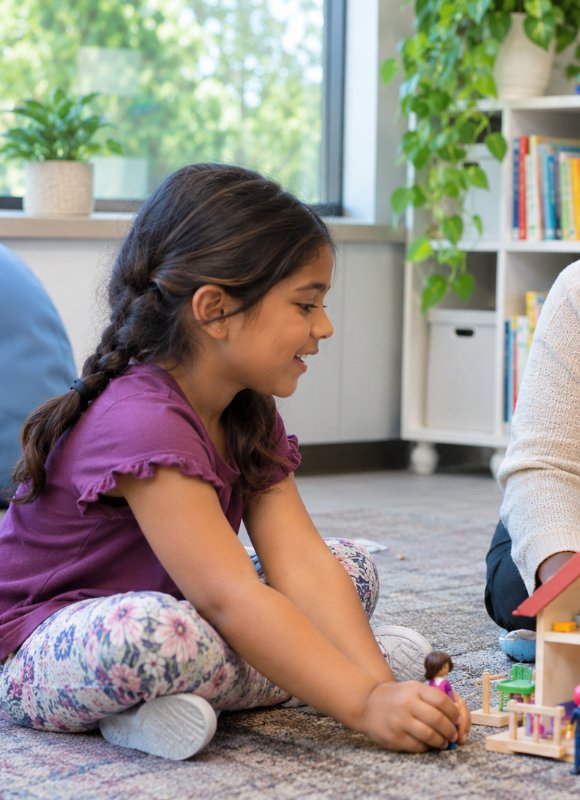
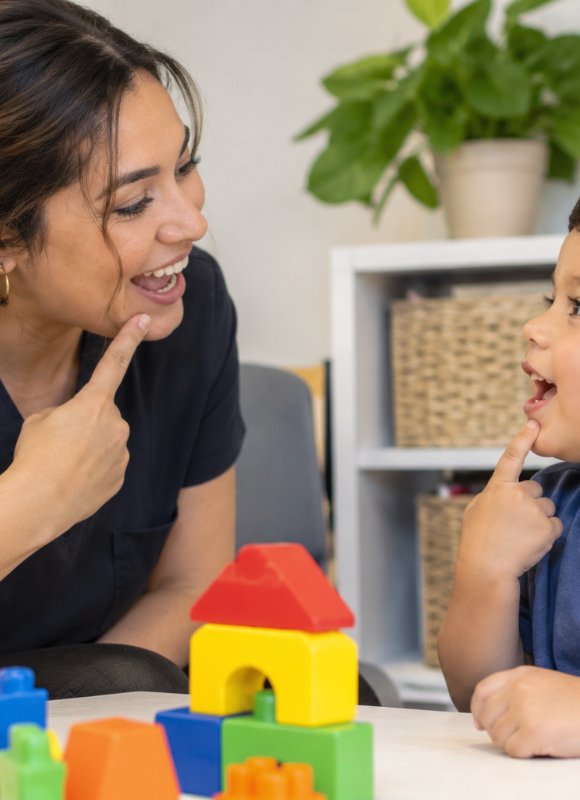
A clinician spends about 15–20 minutes with your child, often through play, pictures and simple questions. Nothing happens without your written permission.
You receive a written summary in plain language. If more information would help, we’ll explain the options, such as a full evaluation, and you decide what’s right for your family.
Speaking two languages at home is a gift. We assess children in English, Spanish or both, so we see what your child really knows, and we encourage you to keep using your home language.